Health Assessment - Anthropometry
Anthropometry
The anthropometry domain in TILDA comprises objective physical measurements designed to assess body size, shape, and composition in older adults. Measures collected across waves include height, weight, waist and hip circumference, and body mass index (BMI), providing information on overall and central adiposity. These assessments support research into obesity, sarcopenia, frailty, cardiovascular and metabolic health, physical function, healthy ageing, and broader health outcomes.
Anthropometry Measures
Click each heading to expand details of this test.
Overview
Measuring: Height measurements, coupled with weight measurements, provide the necessary details to calculate the body mass index (BMI) of respondents. This information provides a quantitative measure of obesity in individuals. Height is also often used as an important control variable for walking speed.
Equipment used: SECA 240 wall-mounted measuring rod.
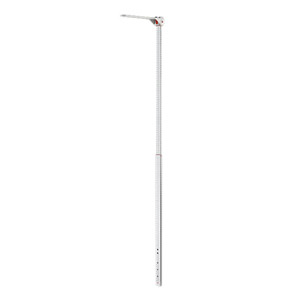
Equipment Description: The Seca 240 is a calibrated stadiometer that allows accurate measurement of standing height to the nearest centimeter or millimeter using a sliding headpiece.
Assessment Type: Centre or Home Assessment
Protocol
- Ask the respondent to remove footwear, heavy outer clothing, and headgear.
- Have them stand with their back against the measuring rod, feet together, knees straight, and facing forward.
- Position the sliding head stop so it gently rests on the top of the respondent’s head, ensuring their eyes are level with the ears and they are looking straight ahead.
- Once measured, ask the respondent to step away and record the height in the results software to the nearest 0.1 cm
Collection Waves
| Measure | Wave 1 | Wave 2 | Wave 3 | Wave 4 | Wave 5 | Wave 6 |
|---|---|---|---|---|---|---|
| Height | X | X | X |
Example TILDA Papers
- Mosca, I. and Wright, R.E. (2016). Height and cognition at older ages: Irish evidence. Economics Letters, 149, pp.98-101.
Overview
Measuring: Weight measurements, coupled with height measurements, provide the necessary details to calculate the body mass index (BMI) of respondents. This information provides a quantitative measure of obesity in individuals.
Equipment used: SECA electronic floor scales.
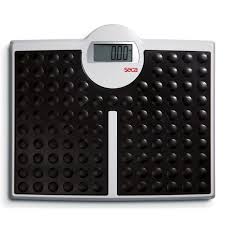
Equipment Description: Digital personal flat scales with large platform. Scales are placed on a firm, flat surface.
Assessment Type: Centre or Home Assessment
Protocol
- Participants are asked to remove heavy outer garments (jackets, coats etc), footwear (shoes, slippers, sandals etc) and socks.
- Participants are asked to step onto the centre of the scale with one foot on each side of the scale (not having weight distributed evenly may affect measurement).
- The participant is then asked to; stand still, face forward, place arms by their side and wait until asked to step off.
- Weight is recorded in kilograms to the nearest 0.1kg.
Collection Waves
| Measure | Wave 1 | Wave 2 | Wave 3 | Wave 4 | Wave 5 | Wave 6 |
|---|---|---|---|---|---|---|
| Weight | X | X | X |
Example TILDA Papers
- Mc Hugh, S., O’neill, C., Browne, J. and Kearney, P.M. (2015). Body mass index and health service utilisation in the older population: results from The Irish Longitudinal Study on Ageing. Age and Ageing, 44(3), pp.428-434.
- Mosca, I. (2013). Body mass index, waist circumference and employment: Evidence from older Irish adults. Economics & Human Biology, 11(4), pp.522-533.
- De Looze, C., McCrory, C., O’Halloran, A., Polidoro, S., Kenny, R.A. and Feeney, J. (2024). Mind versus body: Perceived stress and biological stress are independently related to cognitive decline. Brain, Behavior, and Immunity, 115, pp.696-704.
Overview
Measuring: Hip circumference reflects a combination of pelvic bone structure, gluteal muscle mass, and lower-body fat distribution. Evidence suggests that a higher hip circumference, independent of waist size, is associated with better metabolic outcomes.
Equipment used: SECA measuring tape
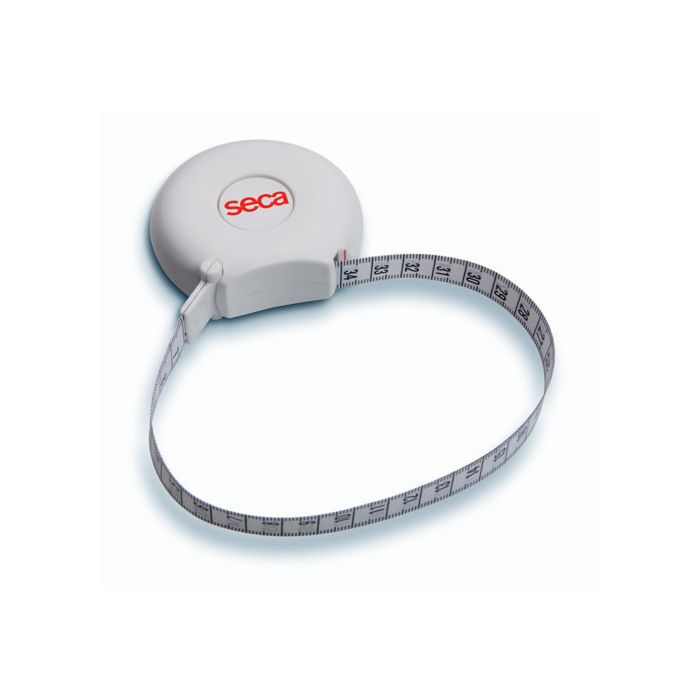
Equipment Description: Retractable non-stretch measuring tape for precise body measurements.
Assessment Type: Centre or Home Assessment
Protocol
- The respondent is asked to wear light clothing for their visit. Ensure all outer layers of clothing, such as jackets, heavy or baggy jumpers, cardigans and waistcoats, shoes with heels, tight garments intended to alter the shape of the body are removed.
- If wearing a belt, the participant is asked to remove, if possible, or loosen for the measurement.
- Ensure the respondent is standing erect in a relaxed manner and breathing normally.
- Weight should be evenly balanced on both feet and the feet should be about 25-30cm (1 foot) apart.
- The arms should be hanging loosely at their sides.
- The hip circumference is defined as being the widest circumference over the buttocks and below the iliac crest.
- To obtain an accurate measurement you should measure the circumference at several positions and record the widest circumference.
- Hold the tape flat against the body and flatten the end of the tape to read the measurement from the outer edge of the buckle.
- All measurements should be taken to the nearest millimetre. If the length lies between two millimetres, then round to the nearest even millimetre.
- If your second hip measurement differs by 3cm or more from the first, you should take a third measurement.
Collection Waves
| Measure | Wave 1 | Wave 2 | Wave 3 | Wave 4 | Wave 5 | Wave 6 |
|---|---|---|---|---|---|---|
| Hip Circumference | X | X | X |
Example TILDA Papers
- Knight, S.P., Laird, E., Williamson, W., O’Connor, J., Newman, L., Carey, D., De Looze, C., Fagan, A.J., Chappell, M.A., Meaney, J.F. and Kenny, R.A. (2021). Obesity is associated with reduced cerebral blood flow–modified by physical activity. Neurobiology of Aging, 105, pp.35-47.
- De Looze, C., McCrory, C., O’Halloran, A., Polidoro, S., Kenny, R.A. and Feeney, J. (2024). Mind versus body: Perceived stress and biological stress are independently related to cognitive decline. Brain, Behavior, and Immunity, 115, pp.696-704.
Overview
Measuring: Waist circumference is an indicator of central adiposity and is used to assess risk for cardiovascular and metabolic disease. Evidence suggests that waist circumference predicts health risk independently and similarly to body mass index (BMI).
Equipment used: SECA measuring tape
Equipment Description: Retractable non-stretch measuring tape for precise body measurements.
Assessment Type: Centre or Home Assessment
Protocol
- The respondent is asked to wear light clothing for their visit. Ensure all outer layers of clothing, such as jackets, heavy or baggy jumpers, cardigans and waistcoats, shoes with heels, tight garments intended to alter the shape of the body are removed.
- If wearing a belt, the participant is asked to remove, if possible, or loosen for the measurement.
- The respondent stands upright, relaxed, feet apart, arms at sides.
- Measure at the midpoint between the iliac crest and lower rib with the tape horizontal and snug.
- Take the reading at the end of a normal expiration.
- Record two measurements; take a third if they differ by more than 3cm.
- Respondents who are wheelchair bound or have a colostomy or ileostomy are excluded from this measurement.
Collection Waves
| Measure | Wave 1 | Wave 2 | Wave 3 | Wave 4 | Wave 5 | Wave 6 |
|---|---|---|---|---|---|---|
| Waist Circumference | X | X | X |
Example TILDA Papers
- Leahy, S., Nolan, A., O’Connell, J., & Kenny, R. A. (2014). Obesity in an ageing society: Implications for health, physical function and health service utilisation. The Irish Longitudinal Study on Ageing (TILDA). https://doi.org/10.38018/TildaRe.2014-01